

Heart Attack Detection Band
Wearable hardware + software, built solo
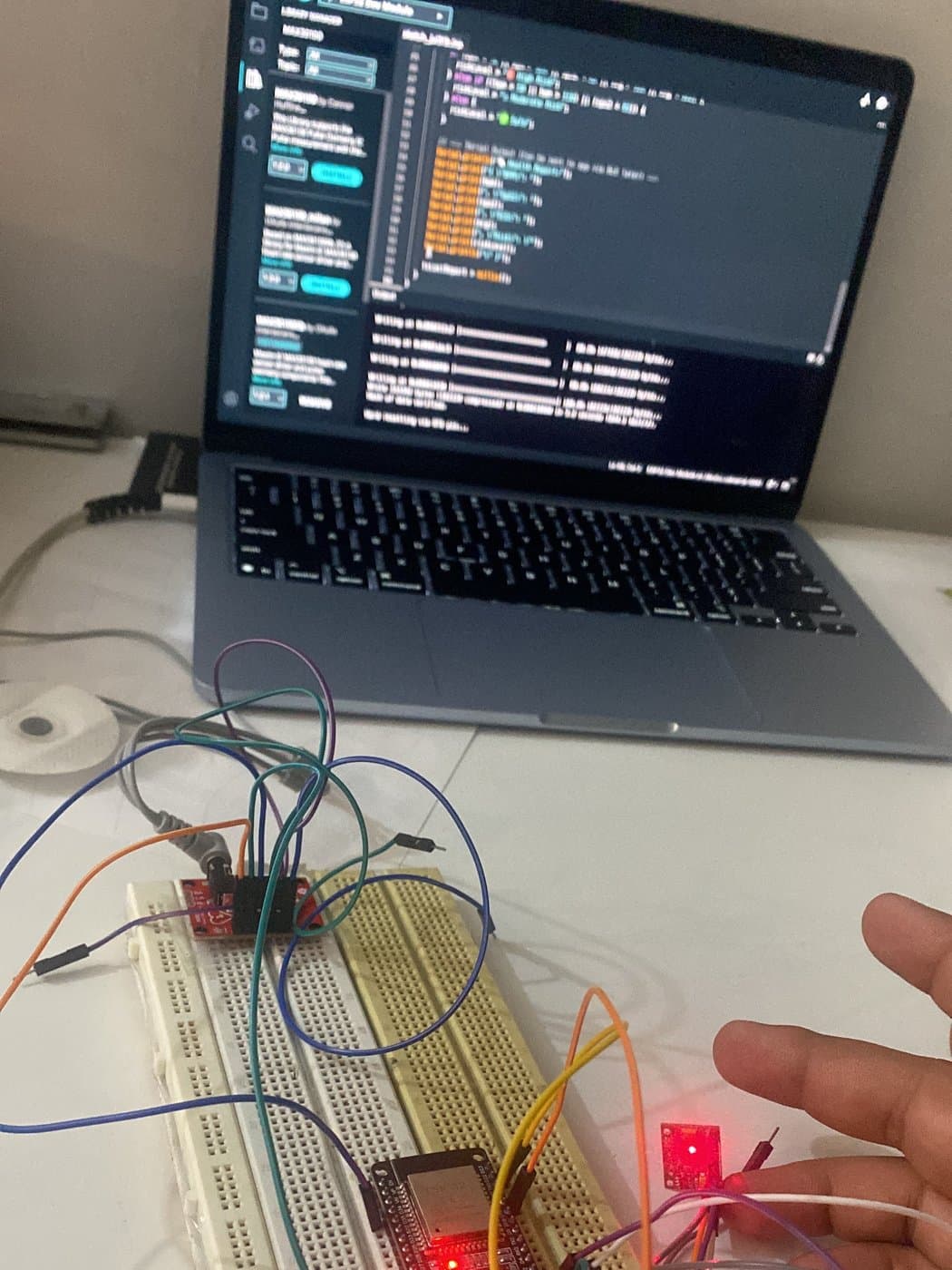
Early warning signs of a cardiac event are often present in physiological signals minutes before the event itself — but usually only a clinical setting is equipped to catch them.
A low-cost wearable that fuses multiple signals rather than relying on one sensor gives a more honest picture of what's actually happening physiologically, and was a chance to work across the full hardware-to-software stack alone.
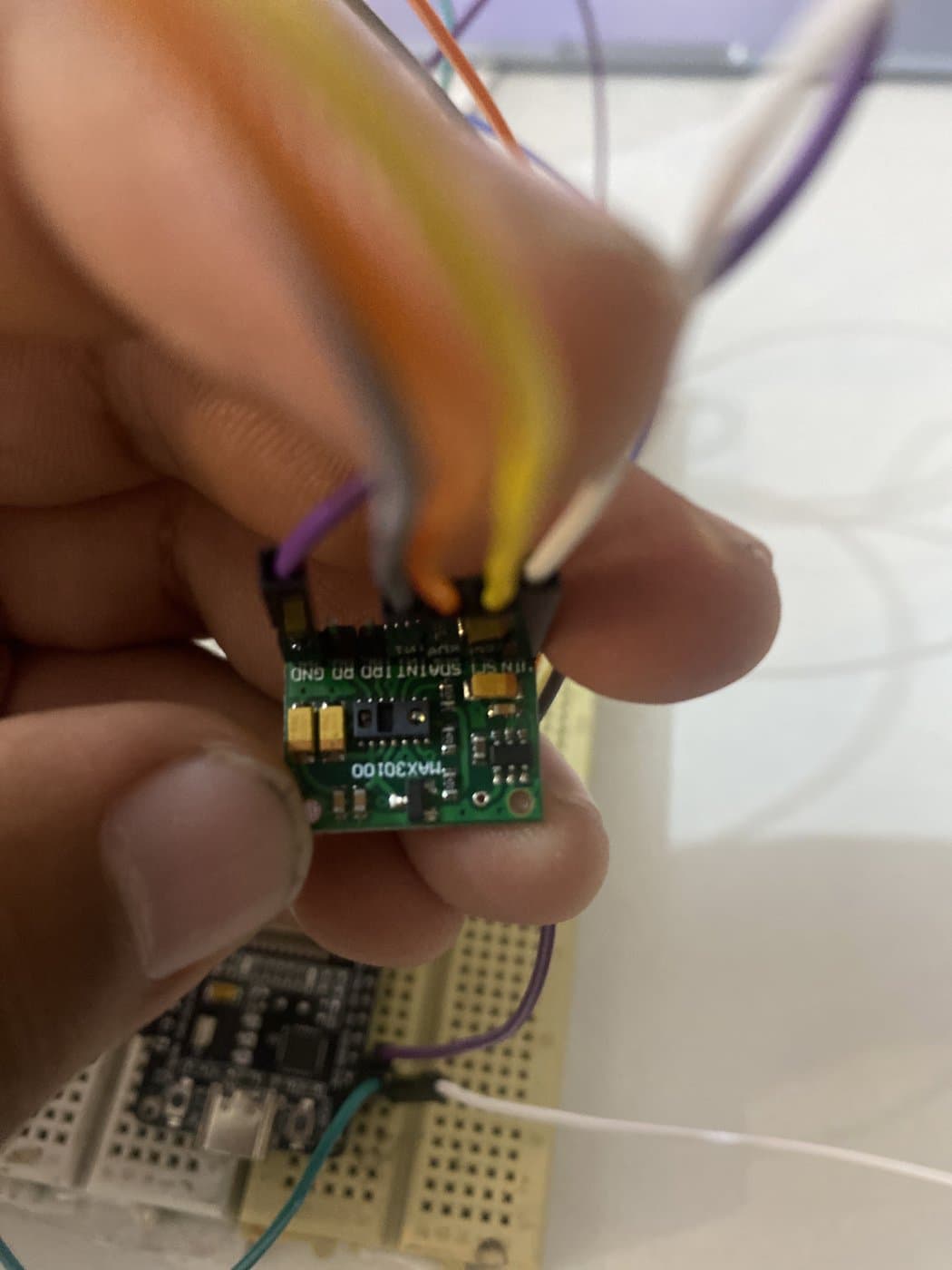
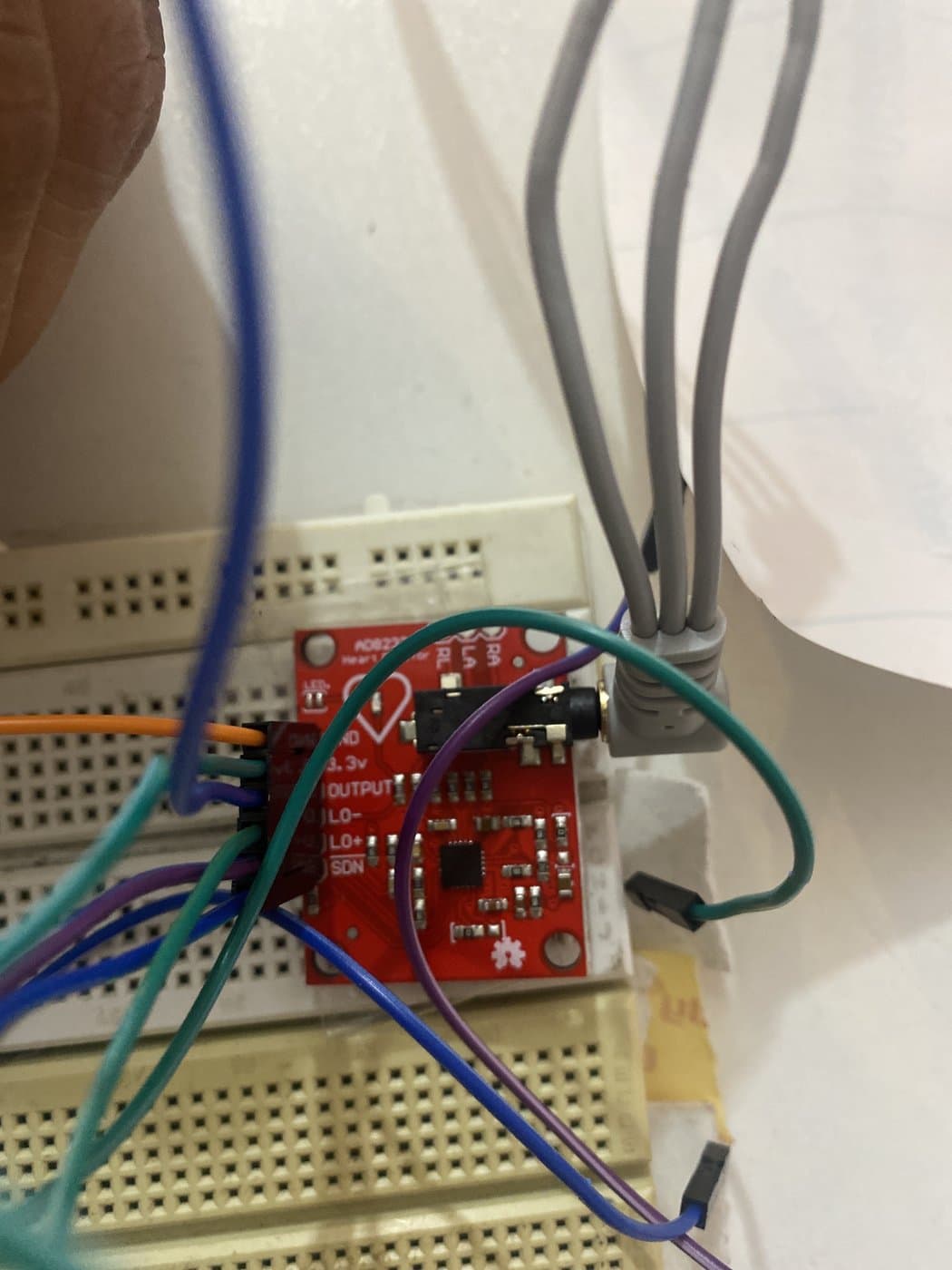
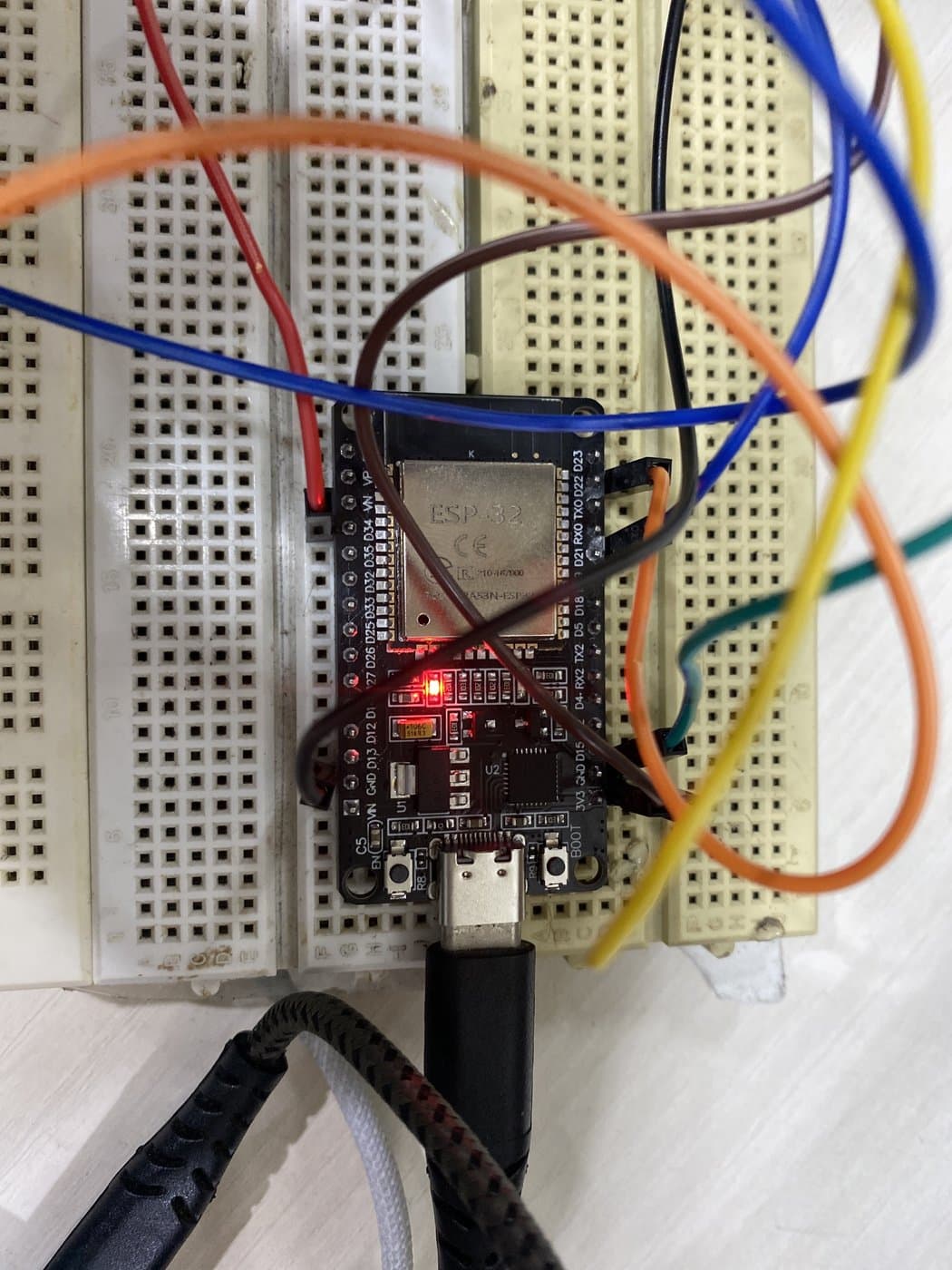
- 01An ESP32-based wearable combining a MAX30100 heart-rate/SpO2 sensor and an AD8232 single-lead ECG sensor to capture real-time cardiac signals.
- 02A rule-based detection layer that fuses heart rate, blood oxygen, and ECG waveform data, aimed at surfacing early-warning indicators 15–30 minutes ahead of a potential cardiac event.
- 03Real-time alerts through an onboard buzzer and a companion Bluetooth-connected mobile app.
- Multi-sensor fusion (HR, SpO2, ECG waveform)
- Rule-based early-warning detection layer
- Onboard buzzer alerts
- Companion Bluetooth mobile app
Research surfaced sweat lactate as a physiological stress signal relevant to cardiac risk, detectable via an enzymatic lactate sensor.
→ Those sensors are cost-prohibitive and not sold as off-the-shelf consumer hardware, so the signal was scoped out. The shipped prototype fuses HR, SpO2, and ECG instead — all from sensors (MAX30100, AD8232) that are actually accessible to a solo, self-funded build.
Working solo prototype.
Next up
Cyber सारथी